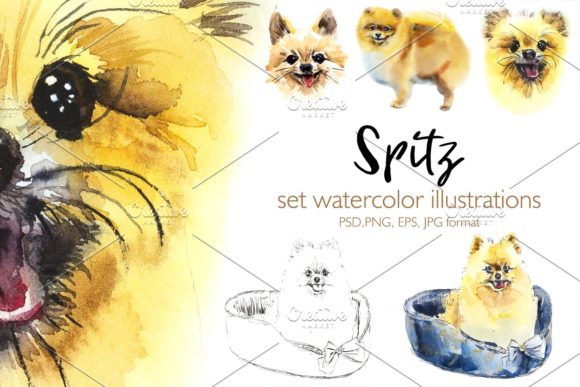
Watercolor Spitz-dog: A Designer's Real-World Review
As someone who has spent years navigating the delicate balance between digital art and physical thread, I approach every new machine embroidery design with a mix of excitement and skepticism. The gap between how an image looks on a screen and how it translates to fabric is where many projects fail. Today, I am putting Watercolor Spitz-dog through that exact lens. This isn't just about whether the file downloads correctly; it is about whether this specific illustration can survive the rigors of production, withstand customer scrutiny, and elevate a handmade product from "cute" to "professional."
The First Impression: Mood and Visual Personality
When I first opened the preview for Watercolor Spitz-dog, the immediate takeaway was softness. In the world of Illustrations, watercolor styles are notorious for being tricky to stitch because they rely on gradients and bleeding edges that thread cannot naturally replicate. However, this design manages to capture the whimsical, fluffy essence of a Spitz breed without feeling overly rigid. The layout suggests a playful energy, making it an instant candidate for items that need a touch of warmth and personality.
Visually, the shape of the dog is distinct enough to be recognizable even at smaller scales, which is a critical factor for any embroidery file. The color palette appears to lean toward pastels and muted tones, typical of watercolor aesthetics. This creates a mood that is inviting rather than aggressive, making it perfect for nursery decor, baby gifts, or boutique apparel. It feels like a design that belongs on a cozy sweatshirt or a high-quality tote bag rather than a heavy-duty work apron. The visual weight is balanced, suggesting that if the stitch density is managed well, it will sit nicely on fabric without puckering.
Real-Life Application: From File to Finished Product
To truly understand the value of Watercolor Spitz-dog, let's imagine a real scenario. Picture yourself running a small Etsy shop specializing in personalized gifts. A customer orders a custom embroidered tote bag for their new puppy owner friend. You load the design into your machine, selecting a natural canvas background. As the needle starts its dance, you watch the fill stitch build up the body of the dog. Because the design mimics a watercolor wash, the transition between colors needs to be seamless.
In this context, Watercolor Spitz-dog shines as a tote bag design. The texture of the canvas helps soften the look of the stitches, bridging the gap between the digital gradient and the physical thread. For a sweatshirt embroidery project, particularly on fleece or cotton blends, the design offers a unique alternative to the standard bold logos we see everywhere. It adds a layer of artistic flair that appeals to buyers looking for something unique. If you were creating a holiday embroidery gift, perhaps a pillow cover or a kitchen towel, the gentle nature of the Spitz would fit perfectly into a winter-themed collection, offering a sense of comfort and home.
For the Etsy seller or small shop product creator, this design acts as a strong brand asset. It signals creativity and attention to detail. When customers see a finished product featuring Watercolor Spitz-dog, they aren't just seeing a dog; they are seeing a curated aesthetic. This elevates the perceived value of the item, allowing you to price your handmade product higher than generic alternatives. The design works exceptionally well as an embroidered patch application too, provided you use a sturdy backing, allowing you to sell them as standalone accessories or add-ons to jackets and bags.
Navigating Challenges: Where Caution is Key
Despite its charm, no digital embroidery file is a magic bullet. There are specific situations where Watercolor Spitz-dog requires careful handling. The watercolor effect often relies on fine lines and subtle shading. If you attempt to use this design on very thin fabrics like chiffon or highly stretchy materials like jersey knit without the proper stabilizer, the result could be distorted. The tension required to hold the intricate details might cause the fabric to gather or pucker, ruining the soft look the design intends to convey.
Furthermore, consider the hoop size. While the overall composition is balanced, the finer details around the eyes and ears of the Spitz might get lost if you try to scale the design down too aggressively. Always check the minimum recommended size before committing to a tiny cap or a small pocket placement. On curved surfaces like caps, the watercolor gradients can sometimes appear uneven due to the way light hits the fabric folds. Testing on a scrap piece of the actual fabric is non-negotiable here.
Dark fabrics present another challenge. Watercolor designs often utilize white or light threads for highlights. On a black sweatshirt, these highlights will pop beautifully, but the darker fill areas might require significant thread consumption and precise thread colors selection to avoid looking muddy. You must review the stitch density carefully; if the design is too dense in dark areas, it can feel stiff against the skin, which is undesirable for baby embroidery or clothing meant for all-day wear.
Practical Notes for the Professional Maker
Before you list Watercolor Spitz-dog in your catalog or start stitching for clients, there are several practical steps to ensure success. First, always test the design on scrap fabric that matches your final product. Check the running stitch outlines to ensure they are smooth and not jagged. Inspect the satin stitch areas, if any, to make sure they lie flat and don't have gaps.
Review the design assets in black and white mockups to see how the contrast holds up without color interference. Compare the design on both light and dark fabric backgrounds to determine if you need to adjust the thread sequence. Use a high-quality stabilizer appropriate for your fabric type; for watercolor effects, a tear-away stabilizer might leave residue, so a cut-away or water-soluble option is often better.
Finally, confirm the licensing terms. If you plan to sell the finished product, ensure the license allows for commercial use. If you intend to sell the embroidery file itself as a digital download, verify that resale rights are included. Understanding these boundaries protects your craft business and maintains professional integrity. By treating Watercolor Spitz-dog with the respect it deserves—testing, planning, and executing with care—you transform a simple illustration into a standout piece of wearable art that customers will love and trust.