Watercolor Baseball Animals: A Designer's Review
As someone who has spent years navigating the fine line between digital art and physical thread, I approach every new machine embroidery design with a mix of excitement and skepticism. The digital preview is one thing; seeing how that artwork translates into stitches on a textured fabric is another entirely. When I first opened the file for Watercolor Baseball Animals, my immediate reaction was to appreciate the whimsical charm it brings to the table. This isn't just a standard clip-art style vector; it carries the soft, bleeding edges and organic feel of actual watercolor painting, which is exactly what makes it stand out in the crowded world of Illustrations.
The First Stitch: Visual Mood and Design Personality
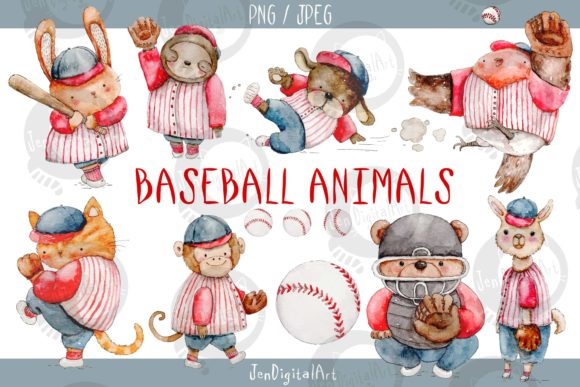
The mood created by Watercolor Baseball Animals is undeniably playful yet sophisticated. Unlike rigid, geometric sports designs that often feel corporate or overly aggressive, this collection feels handmade and approachable. The animals—likely bears, bunnies, or similar cute creatures donning baseball gear—are rendered with a looseness that mimics the flow of paint on paper. In an embroidery context, this is a double-edged sword. On one hand, the "painterly" look allows for creative freedom in stitch placement. On the other, achieving that soft gradient effect requires careful management of your thread colors and stitch density.
Visually, the layout is balanced. The shapes are distinct enough to hold their own when stitched but soft enough to blend well with surrounding elements. If you are looking for a tote bag design that screams "summer festival" or a baby embroidery piece for a nursery, the personality here hits the mark perfectly. It feels like something a customer would want to display proudly, rather than hide in a drawer.
Real-World Application: From File to Finished Product
Let's talk about a real scenario. Imagine you are preparing a custom order for a boutique shop owner who wants to sell personalized sweatshirt embroidery for a local youth baseball league. The client needs something that appeals to parents but doesn't look like a generic team logo. You decide to test Watercolor Baseball Animals on a heather grey fleece sweatshirt.
In this context, the design shines. The soft edges of the watercolor style soften the bulkiness of the fleece. Because the design relies on color blending rather than hard outlines, it avoids the "plastic" look that often plagues dense fill stitch areas on thick fabrics. The running stitch details used to mimic brush strokes add texture without adding excessive weight, which is crucial for comfort on garments worn by children.
I also see great potential for this as an embroidered patch. If you were creating a limited-run patch for a craft fair, the unique aesthetic of these animals would make them a high-value item. They stand out against the sea of traditional, blocky sports patches. For an Etsy seller or small shop product creator, offering items with this specific artistic flair can significantly boost buyer engagement and perceived value. It signals that the finished product is a piece of art, not just a commodity.
Navigating Challenges: Where Caution is Required
While the design is beautiful, it is not a "load and go" solution for every situation. As a professional designer, I must highlight where Watercolor Baseball Animals might struggle if not handled correctly.
Fabric Texture and Color: The watercolor effect relies heavily on color transitions. If you attempt this on a dark fabric without proper underlay or a white backing, the subtle gradients will disappear. Similarly, highly textured fabrics like heavy canvas or nubby wool can disrupt the smooth flow of the "brush strokes," making the design look muddy rather than artistic. Stick to smoother cottons, linens, or medium-weight knits for the best results.
Hoop Size and Detail: Watercolor styles often rely on negative space and delicate lines. If you try to downsize this design to fit a very small hoop, say 4x4 inches or less, the intricate details may get lost. The "bleeding" edges could turn into blobs of thread. Always check the minimum recommended size for the specific animal you choose. If you are working on a cap, ensure the curved surface doesn't distort the shape of the animals, particularly around the baseball caps they are wearing.
Stitch Density: Be wary of areas where the design simulates heavy washes of color. These areas require significant fill stitch. If the density is too high, the fabric may pucker, especially on thinner materials like t-shirts or tea towels. Conversely, if the density is too low, the color won't pop. You may need to adjust the settings in your software to balance coverage and flexibility.
Practical Notes for the Embroidery Designer
Before you commit this design to a client project or mass production, follow these practical steps to ensure success:
- Test on Scrap Fabric: Never skip this step. Stitch out the design on the exact fabric and stabilizer you plan to use. Check how the thread colors blend and whether the stitch density causes puckering.
- Check Thread Contrast: Since this is a watercolor style, the contrast between adjacent colors is vital. Ensure your thread palette supports the intended gradient. Sometimes, swapping a bright thread for a slightly muted tone can achieve a more realistic paint effect.
- Review Stabilizer Needs: Given the artistic nature, you might need a cutaway stabilizer for stretchy fabrics to prevent distortion, while tear-away might suffice for stable wovens.
- Mockup in Black and White: Before sending to the machine, view your digital embroidery file in grayscale. This helps you identify if any light-colored threads will vanish against a light background or if the value contrast is sufficient for the image to read clearly.
- Licensing Verification: As a business owner, always confirm the licensing terms. Can you sell the finished handmade product? Can you resell the embroidery file itself? Understanding these boundaries protects your craft business from legal issues.
Final Verdict: Elevating Your Brand
Ultimately, Watercolor Baseball Animals is a versatile asset for anyone looking to inject some soul into their commercial embroidery projects. It moves beyond the functional into the emotional, creating products that feel personal and thoughtful. Whether you are making a personalized gift for a grandchild or building inventory for a holiday sale, this design offers a unique visual language that resonates with modern consumers.
It encourages you to think like an artist, not just a machine operator. By paying attention to fabric choice, stabilizer application, and color selection, you can transform this machine embroidery design into a standout feature of your portfolio. For the small shop product maker or the apparel decorator seeking to differentiate their brand, this is a strong contender for your next collection. Just remember: the magic happens not just in the file, but in how you execute it on the fabric.